
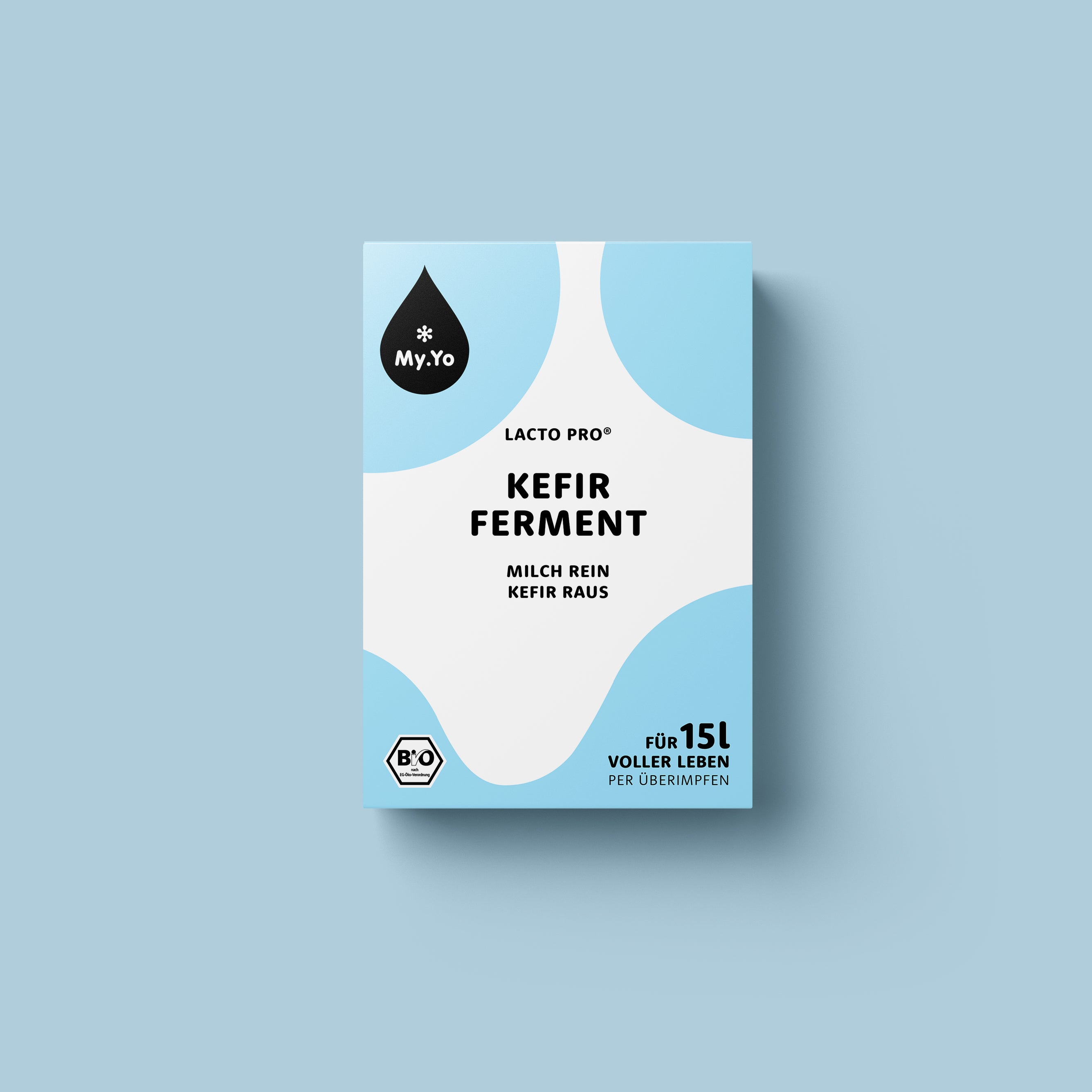
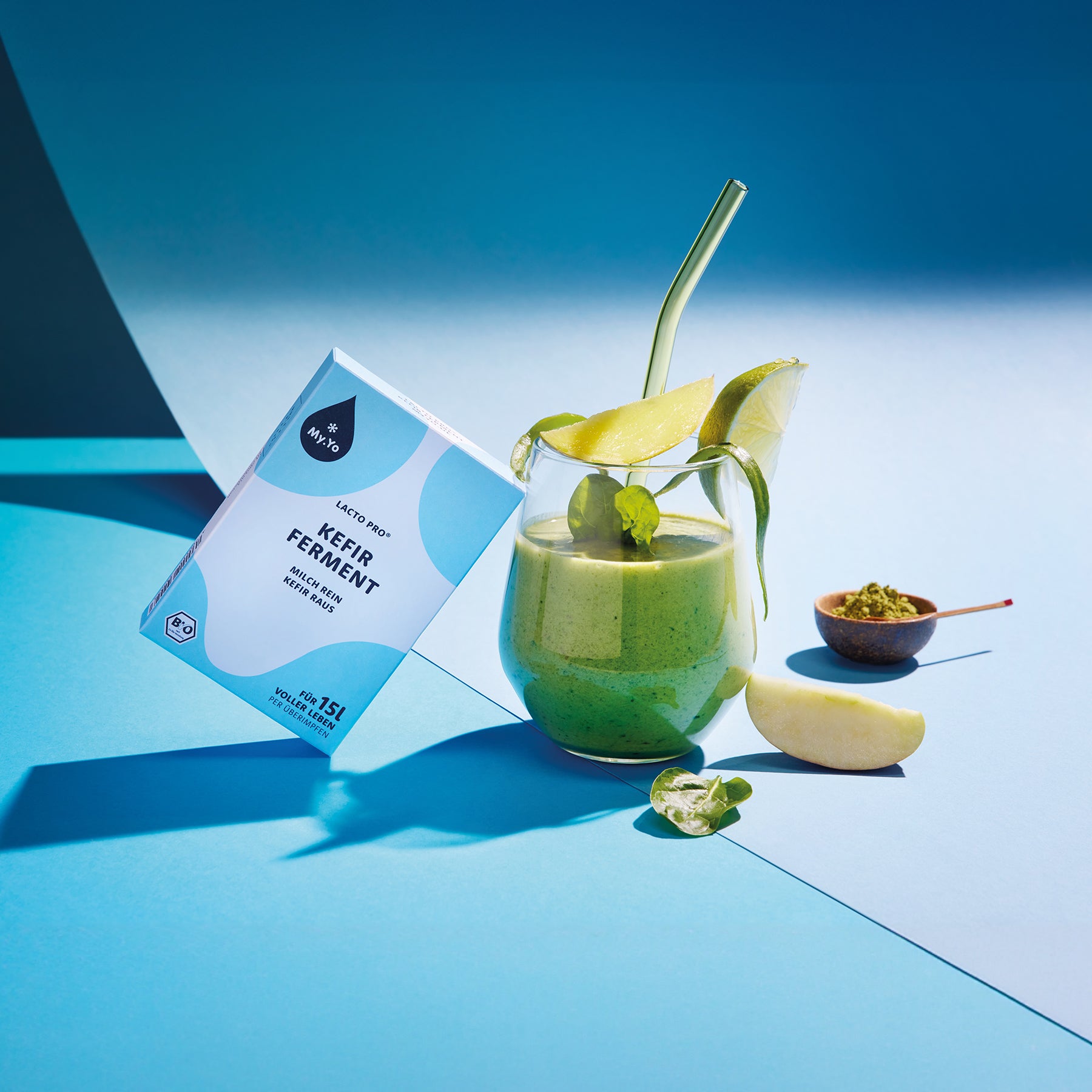
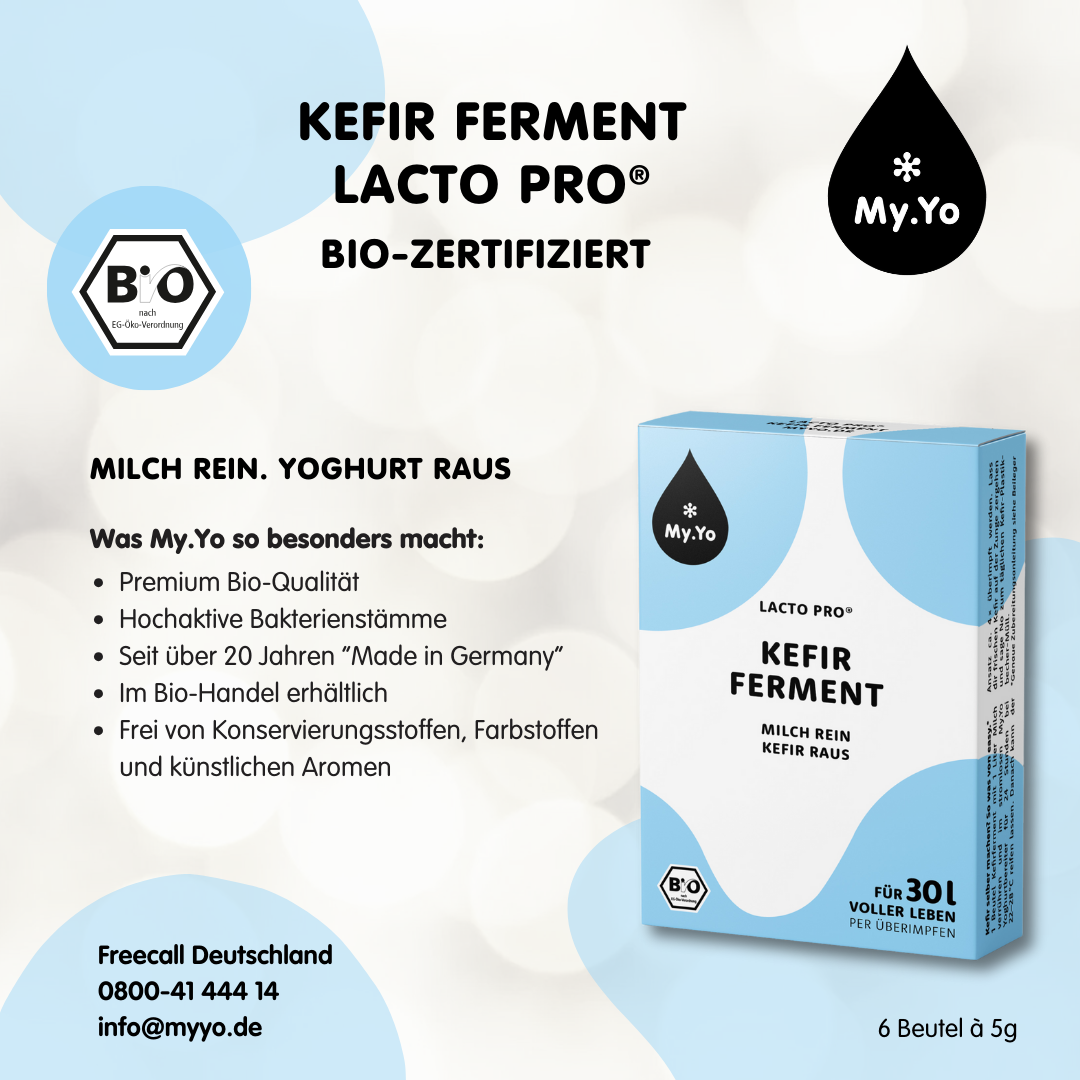
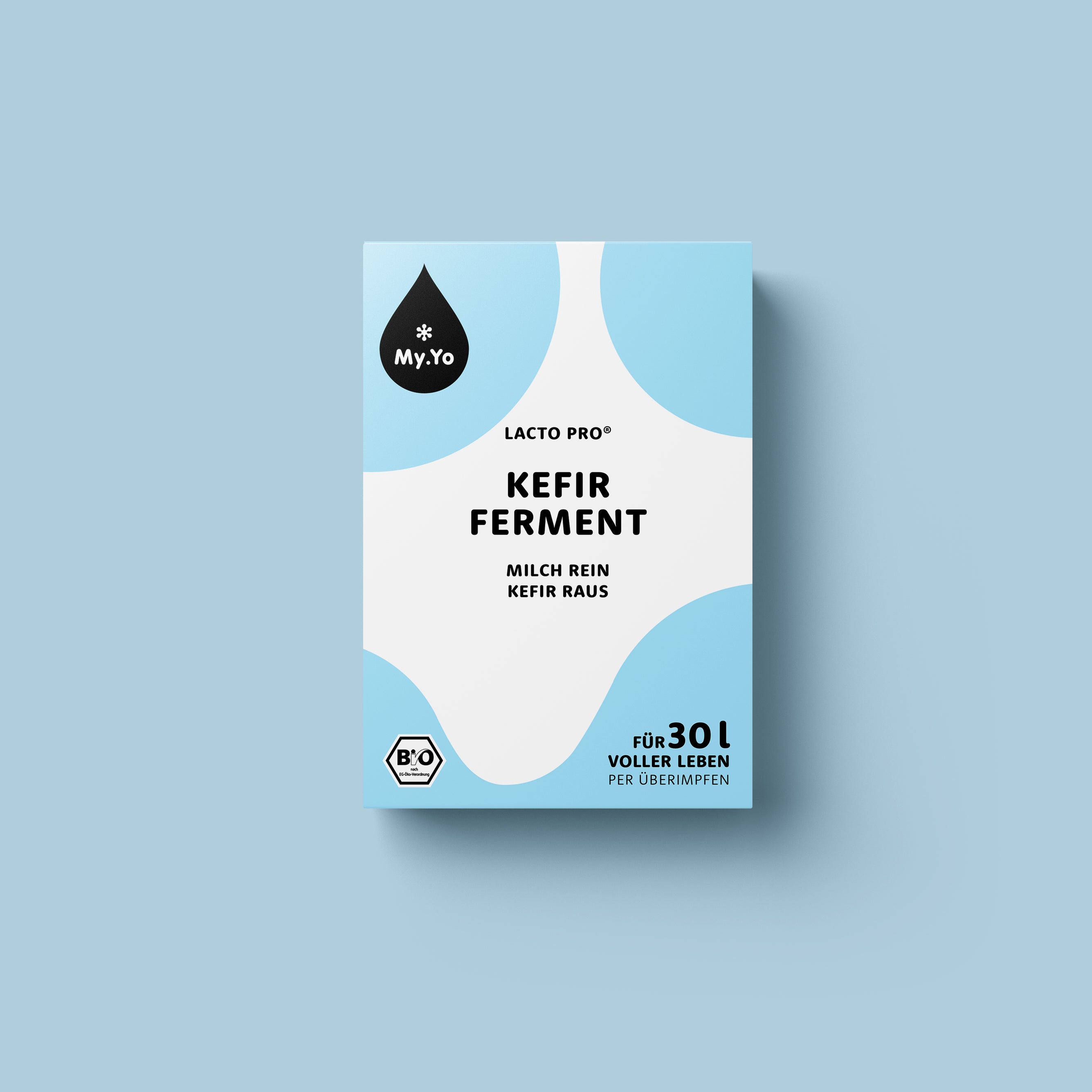
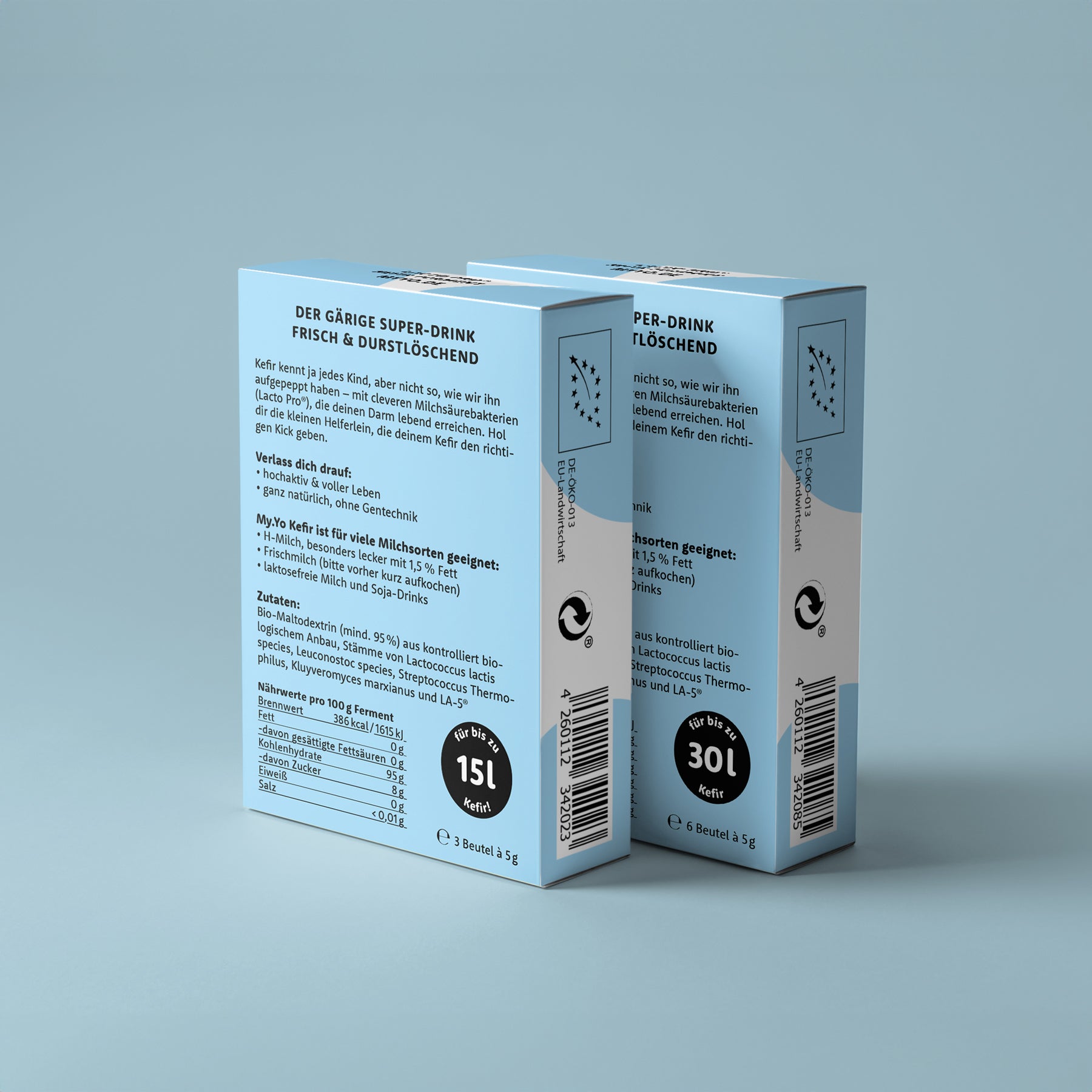
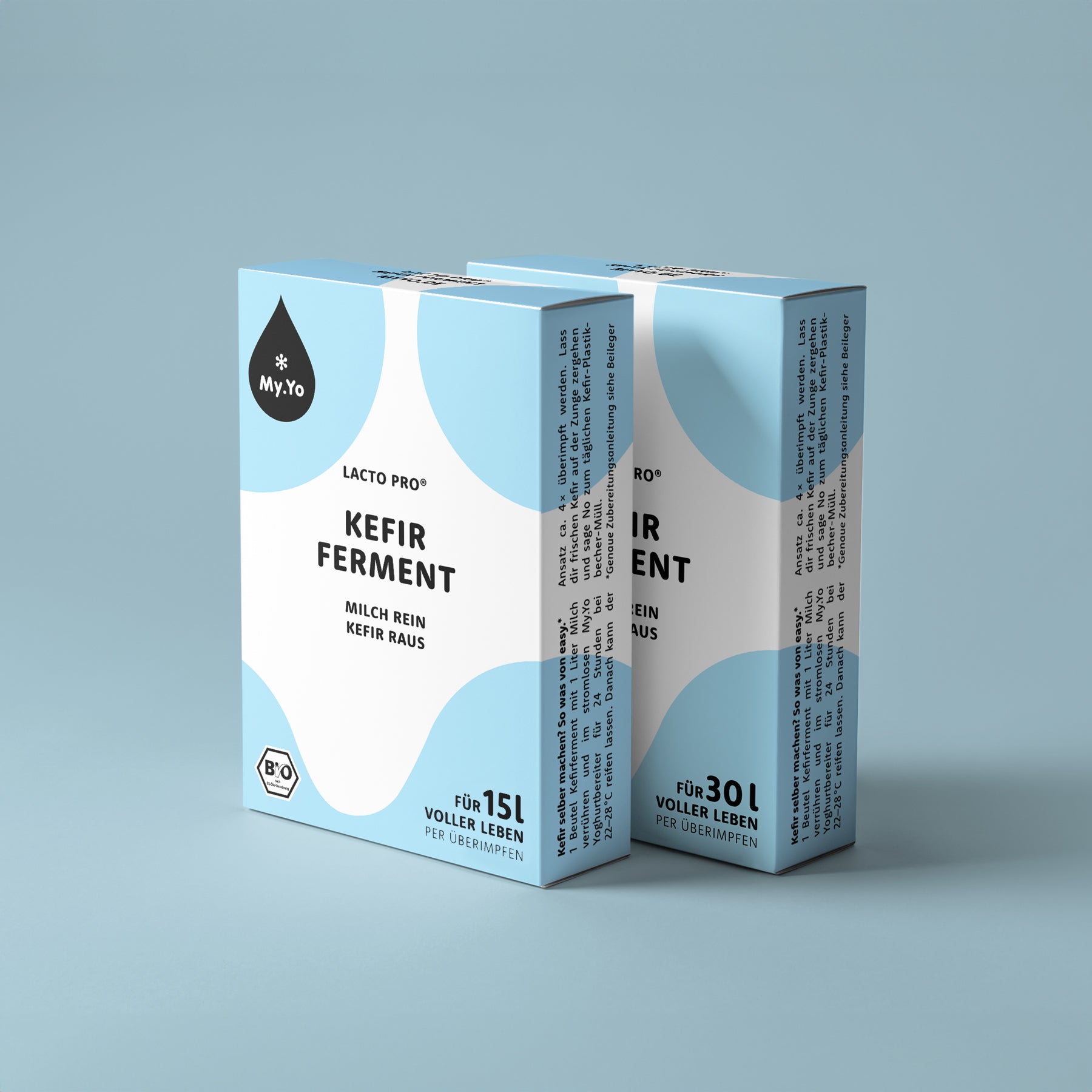
Organic kefir ferment Lacto Pro®
Tax included. Shipping calculated at checkout
Delivery within 3-5 days
 Certified Organic
Certified according to EU organic regulations – no additives, no genetic engineering. Verified organic quality.
Making yogurt at home helps reduce packaging waste.
Description
With the Organic Kefir Culture Lacto Pro from My.Yo, you can make fresh kefir at home with ease – naturally, lightly tangy and gently sparkling, without unnecessary additives.
The selected Lacto Pro cultures contain lactic acid bacteria such as Lactococcus lactis, Leuconostoc, Streptococcus thermophilus and LA-5, creating a reliable kefir fermentation with the typical fresh kefir aroma. Perfect for anyone who wants to make kefir themselves – simple, mild and naturally consistent.
How to make your own kefir
- One sachet makes 1 liter of fresh kefir.
- The finished kefir can be re-cultured up to four times.
- One pack yields up to 30 liters of homemade kefir.
- Kefir ferments at around 30 °C and is ready after about 24 hours.
- The finished kefir keeps in the refrigerator for about 7–10 days.
Ideal for everyone who enjoys making kefir at home – simple, reliable and organic.
Product benefits at a glance
- Kefir starter culture without kefir grains – clean and uncomplicated
- Up to 4× re-culture
- Produces up to 30 L of homemade kefir
- Organic certified (DE-ÖKO-013), 100% plant-based
- Suitable for milk, lactose-free milk and soy drinks
- Natural Lacto Pro cultures including LA-5
Storage & Origin
- Storage: Store dry and below 23 °C
- Origin: EU agriculture
With the Organic Kefir Culture Lacto Pro, you can prepare your own kefir easily and consistently – using live fermentation cultures and natural souring.
Fermentation time
Nutritional values per 100 g dry product
Ingredients
Origin & Certification
Made in Germany. Certified organic according to EU organic regulations (DE-ÖKO-001).
All ingredients come from controlled organic farming.
Storage & Shelf Life
Store in a dry place at room temperature. During hot summer months, we recommend storing in the refrigerator. Best before date: see packaging. Once opened, use immediately.
This product is rated 4.2 of 5.0 stars.
It has received 22 reviews.

It's that easy
FAQ about our ferments
About the cultures
Yogurt cultures are living microorganisms, such as specific bacterial strains, contained in our organic yogurt starters.
These cultures are used to ferment milk into yogurt and have been used in food production for many years.
How much yogurt can I make with one sachet?
Each pack contains 3 or 6 sachets. One sachet is sufficient to turn 1 litre of milk into yogurt.
Each sachet can be re-cultured up to 4 times (sometimes more). With one sachet, you can produce up to 5 litres of yogurt.
Important: always work under clean conditions to avoid contamination.
How does re-culturing work?
- You need a small amount of yogurt (approx. half a cup) with active cultures as a starter. This can be store-bought yogurt or some of your own homemade yogurt.
- Stir the starter into 1 litre of milk and let it ferment in the yogurt maker.
What fat content should the milk have?
- As a general rule: The higher the fat content, the firmer and creamier the yogurt.
- For example, low-fat milk (0.5%) will result in a more liquid, drinkable yogurt.
Are your products vegan?
Our starters are not certified as vegan. However, the ingredients themselves are plant-based.
How should I store the starters?
The starters can be stored at room temperature.
During hot summer months, it is recommended to store them in the refrigerator.
How long do the starters last?
Typically, our starters have a shelf life of6–12 months.
Can I use fresh milk or only UHT milk?
- Raw milk or fresh milk with a short shelf life should always be boiled first.
- Raw milk is untreated and may contain small amounts of natural bacteria. While this is usually harmless when consumed as milk, these bacteria can multiply during fermentation and affect the yogurt.
- Important: allow the milk to cool down before adding the yogurt starter.
If the milk is too hot, the cultures may be damaged.